
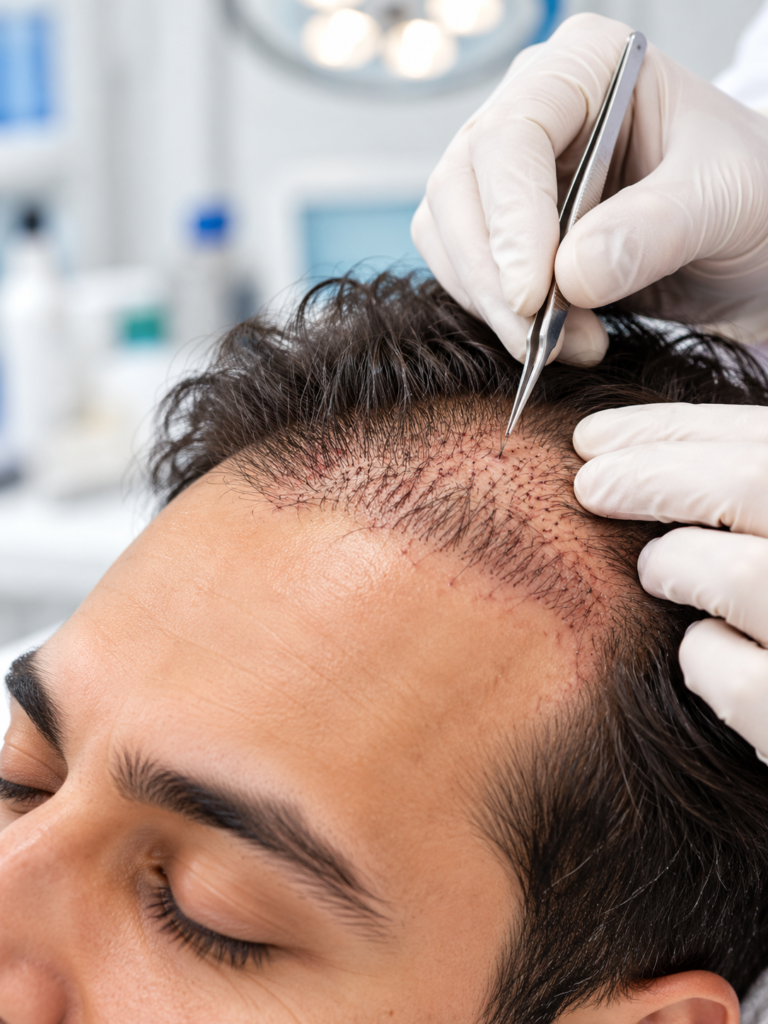
Everything You Should Know Before Choosing a Treatment : Hair Transplant in Ludhiana
Hair loss can affect much more than your appearance. For many people, a receding hairline, thinning crown or increasing bald patches can gradually affect confidence and the way they feel about themselves.
The good news is that modern hair restoration has come a long way. A hair transplant can provide a long-term solution for selected people with permanent hair loss by moving healthy hair follicles from one area of the scalp to areas where hair has become thin or has been lost.
If you are searching for a hair transplant in Ludhiana, it is important to understand that choosing a procedure should not begin with price alone. Your pattern of hair loss, donor hair availability, age, medical history, expectations and the technique recommended for you all matter.
This guide explains the basics so you can approach your consultation with realistic expectations and the right questions.
What Is a Hair Transplant?
A hair transplant is a surgical hair-restoration procedure in which hair follicles are taken from a donor area of the scalp and placed into areas affected by hair loss.
The donor area is commonly located toward the back or sides of the scalp because these follicles can be more resistant to the hormonal effects associated with common forms of pattern hair loss.
The transplanted follicles can then continue to produce hair in their new location.
Unlike temporary cosmetic solutions that simply cover thinning areas, a transplant works with your own hair follicles. However, the final outcome depends on several factors, including donor hair quality, graft survival, surgical technique, hair characteristics and post-procedure care.
Why Are More People Considering Hair Transplant in Ludhiana?
Ludhiana has become an important healthcare destination in Punjab, with aura Aesthetique clinic offering surgical and non-surgical hair-restoration treatments.
Instead of choosing a clinic simply because it appears first in search results or advertises the lowest price, consider:
Who will evaluate your hair loss?
Who will perform or supervise the procedure?
Which technique is appropriate for your case?
How many grafts are actually required?
What does the quoted package include?
What type of follow-up care is provided?
Are your expectations realistic for your available donor hair?
A good consultation should answer these questions before you commit to treatment.
FUE vs FUT: What Is the Difference?
Two commonly discussed hair-transplant techniques are FUE and FUT.
FUE Hair Transplant
FUE stands for Follicular Unit Extraction.
In FUE, individual follicular units are extracted from the donor area and subsequently placed into the recipient area.
One of the reasons FUE is widely discussed today is that it does not involve removing a linear strip of scalp tissue. It can therefore be an option for people who prefer a procedure without a traditional linear donor-area scar.
However, FUE is still a surgical procedure, and the quality of the result depends heavily on appropriate planning, extraction, graft handling, placement and aftercare.
FUT Hair Transplant
FUT stands for Follicular Unit Transplantation.
In FUT, a strip of donor scalp containing hair follicles is removed and divided into individual follicular units for transplantation.
FUT can still have a role in selected patients, particularly when a larger number of grafts may be required or when the surgeon considers it more appropriate based on the individual’s donor characteristics.
There is no universally “best” technique for everyone.
The right approach depends on your individual hair-loss pattern, donor supply, scalp characteristics, previous procedures and long-term restoration goals.
Who Is a Good Candidate for a Hair Transplant?
A hair transplant isn’t automatically suitable for everyone experiencing hair fall.
You may be considered a candidate if you have:
Pattern hair loss with stable or reasonably predictable progression
Adequate donor hair
Sufficient hair density in the donor area
Realistic expectations about the final result
No untreated scalp condition that could interfere with the procedure
Age alone doesn’t determine whether you are suitable.
For younger patients, doctors may sometimes recommend waiting or controlling ongoing hair loss before considering surgery. This is because transplanting hair too early can create problems later if surrounding native hair continues to thin.
A proper assessment is therefore much more valuable than simply asking, “How many grafts do I need?”
How Many Grafts Will You Need?
There is no standard graft number that works for everyone.
Someone with a small receding hairline may need considerably fewer grafts than someone with extensive frontal and crown hair loss.
The number of grafts can depend on:
Size of the bald or thinning area
Desired density
Existing native hair
Donor hair density
Hair thickness and texture
Hairline design
Future progression of hair loss
An experienced surgeon should balance your desired density with the amount of donor hair available.
Using too many grafts simply to create maximum density may not always be the best long-term strategy.
What About Hair Transplant Cost in Ludhiana?
One of the most searched questions is: “What is the hair transplant cost in Ludhiana?”
The honest answer is that there is no single fixed price.
The total cost can vary depending on:
Number of grafts required
Technique used
Complexity of the case
Surgeon and medical team
Clinic facilities
Whether it is a primary or revision procedure
Pre- and post-operative care
Additional treatments recommended for existing hair
During your consultation, ask for an estimate and clarify exactly what is included.
A cheaper quote is not necessarily better value, and a more expensive procedure does not automatically guarantee a better result.
Is a Hair Transplant Painful?
Hair transplantation is generally performed using local anaesthesia, so the treatment area is numbed during the procedure.
You may experience some sensation during different stages of the treatment, and temporary discomfort, swelling or tightness can occur during recovery.
Your doctor should explain the expected experience and prescribe or recommend appropriate medication and aftercare when necessary.
If pain becomes severe, unusual or progressively worse after the procedure, you should contact your treating medical team.
What Happens After a Hair Transplant?
One of the biggest misconceptions about hair transplantation is expecting immediate full growth.
The transplanted area needs time to heal and the follicles need time to move through their natural growth cycle.
Temporary shedding of transplanted hairs can occur before new growth develops. Visible improvement generally takes months rather than days.
The final outcome can continue developing over a longer period, so patience is an important part of the process.
Your clinic should give you specific instructions regarding:
Washing the scalp
Sleeping position
Physical activity
Sun exposure
Medications
Scalp care
Follow-up appointments
Following those instructions carefully can help support the recovery process.
Can Hair Transplant Give Permanent Results?
Transplanted follicles are generally selected from areas considered more resistant to the hormonal process responsible for common pattern hair loss.
However, a transplant does not stop every form of hair loss.
Your existing, non-transplanted hair can continue to thin over time.
This is why hair restoration should be viewed as a long-term plan rather than simply a one-day procedure.
In some patients, doctors may recommend medical hair-loss treatments before or after surgery to help maintain existing hair. Whether these treatments are appropriate depends on the individual’s diagnosis and medical history.
Hair Transplant Is Not the Right Solution for Every Type of Hair Loss
Hair fall has many possible causes.
Temporary shedding can occur because of nutritional deficiencies, illness, stress, hormonal changes, certain medications and other medical conditions.
Some inflammatory or scarring scalp conditions can also require specific medical treatment.
A transplant should therefore not be considered the first answer to unexplained hair fall.
If your hair loss is sudden, patchy, rapidly progressing or accompanied by scalp symptoms, a medical evaluation should come first.
The underlying cause needs to be identified before deciding whether transplantation is appropriate.
How to Choose a Hair Transplant Clinic in Ludhiana
When searching for a hair transplant clinic in Ludhiana, don’t make your decision based only on advertisements, discounts or before-and-after photographs.
Look for a clinic where you can receive:
1. A proper diagnosis
The doctor should assess your pattern of hair loss and determine whether transplantation is appropriate.
2. Individualised planning
Your hairline and graft requirement should be planned around your facial proportions, donor supply and future hair-loss pattern.
3. Clear information about the technique
You should understand why FUE, FUT or another approach has been recommended for you.
4. Realistic expectations
A responsible clinic should tell you what is achievable rather than promise an unrealistic transformation.
5. Transparent pricing
Ask what your package includes and whether medications, follow-ups or additional procedures are charged separately.
6. Proper aftercare
Hair restoration doesn’t end when you leave the clinic. Follow-up and post-operative instructions are an important part of the treatment journey.
Questions to Ask During Your Hair Transplant Consultation
Before booking your procedure, consider asking:
What is causing my hair loss?
Am I a suitable candidate for transplantation?
How many grafts do I actually need?
Which technique do you recommend and why?
Who will perform the procedure?
What can I realistically expect from the result?
Will my existing hair continue to thin?
What will my total treatment cost include?
What is the expected recovery period?
What aftercare will I need?
Will I need medical treatment for my existing hair loss?
The answers can help you compare clinics based on medical suitability rather than marketing claims.
Final Thoughts
Choosing a hair transplant is a personal decision, and the best results begin with good planning.
If you are considering a hair transplant in Ludhiana, take time to understand your hair-loss pattern, evaluate your donor area and discuss your expectations with a qualified medical professional.
Don’t choose a procedure simply because it is cheaper, newer or heavily advertised.
The goal should be more than adding hair. A well-planned restoration aims to create a natural-looking hairline, use your donor supply wisely and develop a result that suits you over the long term.
If hair loss is affecting your confidence, start with a professional consultation and get a personalised assessment before making a decision.
Frequently Asked Questions About Hair Transplant in Ludhiana
How much does a hair transplant cost in Ludhiana?
There is no fixed price because the cost depends on factors such as graft requirement, technique, complexity, surgeon and clinic. A personalised consultation is the best way to receive an accurate estimate.
Is FUE better than FUT?
Neither technique is universally better. FUE and FUT have different advantages and may be appropriate for different patients. Your surgeon should recommend the technique based on your individual hair-loss pattern and donor area.
How long does it take to see hair-transplant results?
Hair growth takes time. Initial shedding can occur, followed by gradual new growth over the following months. The final result generally develops over a longer period rather than immediately after surgery.
Can women undergo hair transplantation?
Yes, selected women with suitable patterns of hair loss and adequate donor hair may be candidates. However, the underlying cause of female hair loss should be evaluated before considering surgery.
Is a hair transplant permanent?
Transplanted follicles are generally intended to provide long-term growth, but the surrounding native hair can continue to thin. Long-term medical management may therefore be recommended in appropriate cases.
Should I choose a clinic based on the lowest hair transplant cost?
Not necessarily. Price should be considered alongside the surgeon’s expertise, treatment plan, graft requirement, facility standards, aftercare and expected outcome.
What should I do before booking a hair transplant?
Start with a consultation. Get your hair-loss cause assessed, understand your donor capacity, discuss realistic expectations and request a clear treatment and pricing plan before making a decision.